Ich are a common freshwater parasitic protozoa of the genus Ichthyophthirius. It is also known as White Spot Disease. Ich is ciliated, meaning it is covered in small hair-like appendages called cilia that allow it to swim freely while it searches for a fish to attach itself to. Once attached to a fish’s skin, it forms a tough outer shell to protect it while it feeds on the fish’s bodily fluids. During this time, it grows large enough to be seen with the naked eye. Fish with Ich look like they have tiny white bumps on their skin.
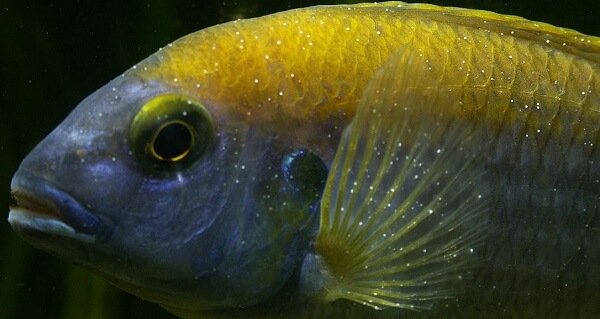
Ich is one of the most common aquarium diseases, and most aquarists will experience having to deal with Ich sooner or later. The reason being, is that, just like germs are ever present in the air in small numbers, Ich is usually always present in aquarium water in small numbers. If fish become stressed, for example if aquarium disease-preventative hygiene or water maintenance is lacking, or if there is a sudden drop in temperature because the heater has failed, the fish can easily become stressed enough to be vulnerable to diseases such as Ich.
Ich outbreaks can occur when new fish are introduced into the aquarium. A quarantine period for observation of new fish in a smaller separate tank can help reduce the chance of this and other diseases from happening.
Unlike in nature, where large amounts of water and large numbers of fish are available for Ich to live its life-cycle without becoming an ecological problem, aquariums, being limited in size, can quickly become infested. As the Ich lives its life-cycle, reproducing itself and reinfecting the same fish, it will eventually weaken and possibly kill them. So it is important that aquarium disease-preventative hygiene and water maintenance are performed on a regular basis.

While Ich is attached to a fish, its tough cyst shell protects it from any medication. But during its free swimming form, it is vulnerable and can be killed.
Some experts have argued that medicating against Ich is easier and less time consuming than constantly maintaining and/or administering hygienic water maintenance as a preventative treatment option. Medication has perhaps been over-used in the industry and hobby, to the point that perhaps Ich has evolved to become tougher and more resistant. That is why medicating is the last item on the following list of things to do in dealing with Ich. Although, circumstances may require medicating first in order to preserve fish well-being and life.
The Ich life-cycle takes at least 3 days to complete at 80 degrees Fahrenheit (26.7 degrees Celcius), so whatever treatment is used should last at least 4 days, preferably for a week to be sure.
1) Raise Temperature
The transmission stage of the Ich life cycle cannot live very long in water that is 89.5 degrees Fahrenheit (31.9 degrees Celcius), and at this higher temperature, the Ich is less likely to attach to a fish before the Ich dies.
Before raising the temperature, first check the preferred temperature range of the aquarium’s particular fish species, and only then, raise the temperature accordingly to within 85 to 89.5 degrees, depending on what the fish can handle. Raise the temperature slowly, 1 or 2 degrees per day until the desired temperature is reached.
2) Add Air Stones
There are two reasons to add air stones.
1) While we can easily see Ich on the fish’s skin, it is often more difficult to see it on the gills. But it can be there and if so, has a suffocating effect on the fish. Damage to the gills can cause death by way of suffocation, but can also lead to lethal infection of the delicate gill tissue. It is important to increase the levels of dissolved oxygen in an Ich infested tank for this reason.
2) Warm water does not hold as much oxygen as cooler water. So, add air stones while the temperature is raised.
3) Add Salt
In addition to increased temperature and aeration, add 1 teaspoon of aquarium salt per gallon of water. This can help the fish’s immune system fight off stress. The salt is also harmful to the Ich.
4) Perform Water Changes
If all you are doing to treat the Ich is raising temperature, use a gravel siphon to remove 50% of the water each day you are treating for Ich. This will physically remove Ich that fell away from the fish after feeding, before they can complete their reproductive stage.
If you are treating with salt, when you add more water after siphoning, you should add the amount of salt removed by the siphoning. This amount should equal 1 teaspoon of salt per gallon of water replaced.
If you are treating with medication, read the directions, as some medications don’t recommend water changes until the treatment period is over.
5) Medicate
If the Ich infestation is severe, medication may the best first option. Here is a link to an Ich treatment Happy Fish uses. This Ich treatment is specifically designed to not harm the beneficial bacteria within the filtration system of the aquarium.
About author and webmaster… Troy Boylan
Ecoculture Village Founder & President, Anthropology BA, Interdisciplinary Studies: Ethnobotany BS. Two things I think are worth anything at all… all things wilderness and ecoculture… and well, RPGs… and skateboarding!
So, what’s up!? Google+ | LinkedIn | Twitter